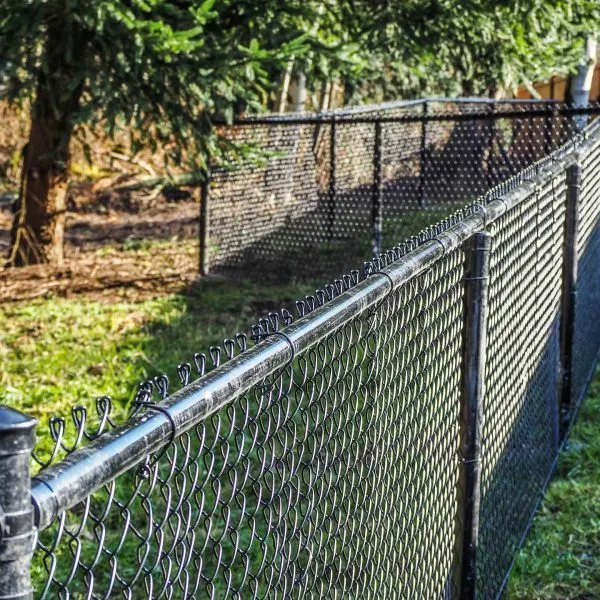
It depends on the height, the material and whether your address is in the City of Bakersfield or in unincorporated Kern County. The city's zoning code sets fence heights, and its Building Division decides when a building permit is needed. We check both for your address before work starts.
Do I need a permit to build or replace a fence?
Ask the building department for your address, because the answer changes with height and material. In the city that is the Bakersfield Building Division. Oildale, Rosedale outside the city limits, Lamont, Buttonwillow and other unincorporated areas go through Kern County. Masonry and block walls are treated more strictly than wood, vinyl or chain link. A like-for-like replacement at the same height and in the same place is the simplest case, but it still has to meet today's height limits. We confirm what applies and include any permit in the written quote.
How tall can my fence be? Is 6 feet allowed?
Yes, in side and rear yards. Bakersfield Municipal Code section 17.08.180 limits fences, walls and hedges in residential zones to 6 feet in side and rear yards and 4 feet in the front yard. The code allows more where the city itself requires a taller wall for noise or screening, such as along a major street. Kern County and the other cities we serve have their own limits. Separately, state law treats a fence that unnecessarily exceeds 10 feet and was built out of malice to annoy a neighbor as a private nuisance (Civil Code section 841.4).
How close to the property line can I build? Do I need a survey?
A boundary fence normally goes on the line or just inside it, and it must stay out of the public right-of-way and any easement that bars it. If the boundary is not marked, or you and your neighbor disagree about it, get a plot plan or a survey before any post is set. Only a licensed land surveyor can establish the line. Do not assume an old fence or the edge of a block wall is the boundary.
Are barbed wire and electric fences allowed?
Only in limited cases inside the city. Section 17.08.180 bars barbed or electrified wire within 3 feet of a lot line in residential zones, and sharp wire on top of a fence under 6 feet. In commercial and industrial zones the lowest strand of barbed wire must be at least 6 feet 3 inches above the highest adjoining grade. Agricultural zones have their own conditions. Farm and oilfield sites in the county follow Kern County's ordinance.
I live in a historic district. What can I build?
Check with the city's Planning Division before choosing a style. Older parts of Bakersfield can carry extra design review for work visible from the street. We do not guess at this. We ask about the address and build what is approved.
Can my condo association or HOA restrict my fence?
Yes. Many newer Bakersfield subdivisions have recorded rules on fence height, material and color, and on what can be attached to the tract's block walls. Those rules apply in addition to the city code. Get the association's approval in writing before materials are ordered.
We are adding a pool. What fence does code require?
California's Swimming Pool Safety Act describes the enclosure in Health and Safety Code section 115923. It must be at least 60 inches high, with no more than 2 inches of clearance at the bottom, no gap that passes a 4-inch sphere, and an outside face without handholds or footholds a young child could climb. Gates must open away from the pool, close and latch by themselves, and have the latch at least 60 inches above the ground. The city or county building department inspects the barrier and may add requirements.
The inspector failed my existing fence for the pool. Who brings it up to code?
A fence contractor can. The usual corrections are self-closing hinges and a self-latching latch at the right height, a gate turned to swing away from the water, gaps closed at the bottom, and sections that are too low or easy to climb replaced. With block walls, the fix is often at the side gates. Send us the correction notice and we will price the work item by item.
My association only allows a 4-foot open fence, but I want privacy. What are my options?
Work inside the rules first. Shrubs or vines behind a 4-foot open fence give privacy over time. A separate screen near the patio may be allowed where a taller boundary fence is not. If neither fits, apply to the board in writing for a variance. Check your plot plan for utility easements as well, since a fence across one may have to be removable.
Who calls 811 before digging, me or the contractor?
Whoever is doing the digging. Kern County is served by USA North 811, not by DigAlert, which covers the counties to the south. USA North asks for at least 2 working days' notice before digging, not counting the day of the request, and for the dig area to be marked in white first. When we build the fence, we place the ticket. Private lines such as sprinkler pipe, pool plumbing, yard lighting, and gas or water lines on farm and oilfield property are not marked by the utilities, so show us where they run.
My contractor wants to skip the permit and reuse the old holes. What is the risk?
You carry the risk, not the contractor. If a permit was required and none was pulled, the city or county can stop the work or order changes, and unpermitted work can surface again when you sell. California also requires a licensed contractor for any job that needs a permit, whatever the price.
The city says my existing fence breaks the current rules. Can I just repair it?
Ask the city before spending anything. Routine repair of an older fence is often accepted where a rebuild would have to meet the present limits, but that decision belongs to the Planning Division or code enforcement, not to a fence company.
The only way to get a real number for your property is a site visit. The estimate is free. Call (661) 475-8961 or text us a photo of the fence line.